Hey readers,
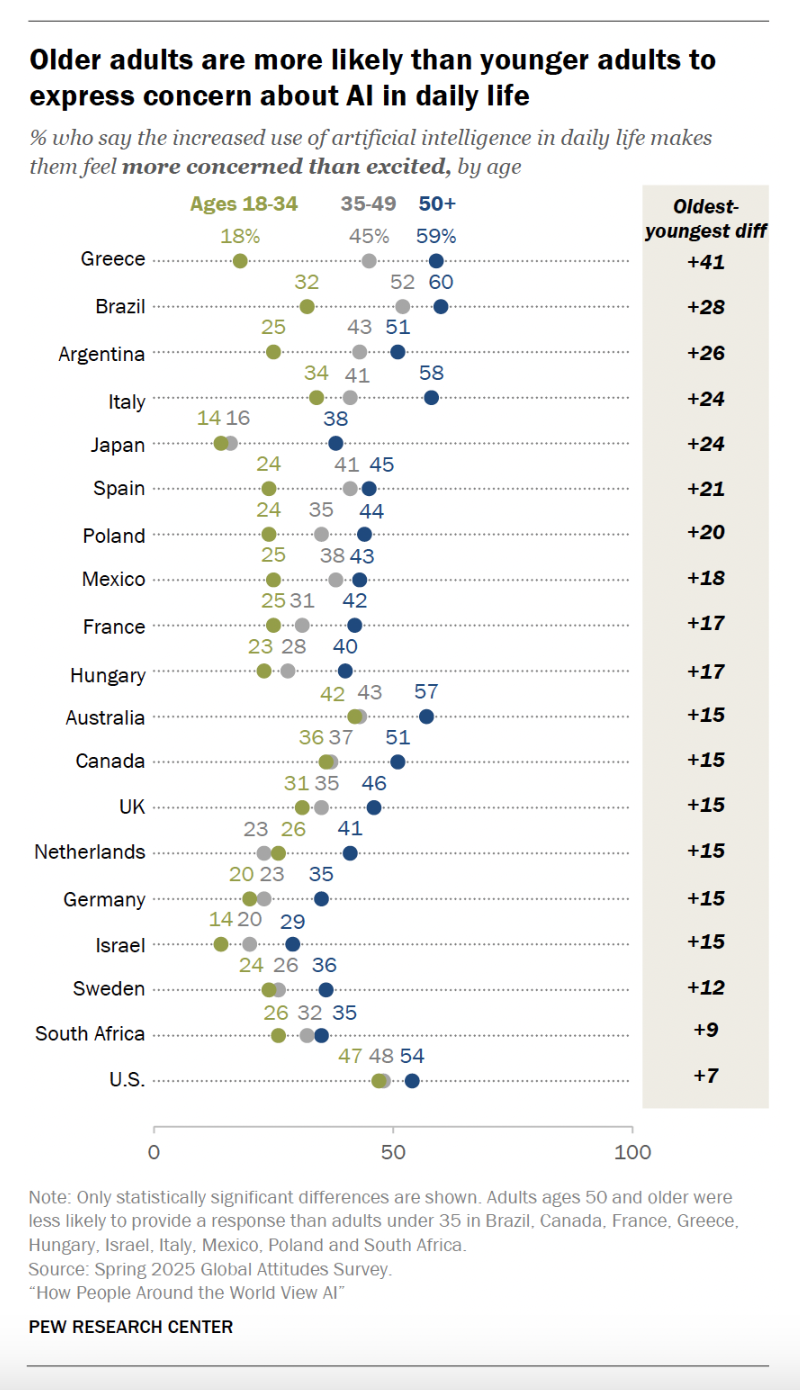
It's Sigal Samuel here. Generative AI is everywhere these days — and Gen Z isn't fully sold on it. In fact, some young Americans are actively revolting against it. In many ways, they're the ones on the frontlines when it comes to the rollout of AI products. They see their peers soaking up hours upon hours of AI video slop, forming romantic relationships with chatbots, and using ChatGPT to cheat their way through school or to access dubious therapy, sometimes with terrible results. According to a new survey from the Pew Research Center, in most countries polled, older adults are likelier than youths to say they are more concerned than excited about the growing use of AI in daily life. But take a closer look, and you'll see that people in the US — the cradle of Silicon Valley — are the most worried of any nation surveyed, and the gap between young and old is really small. Almost half of young adults say they're more concerned than excited about AI. |
They're fed up. And so, they're doing what young people do best: rebelling. Some of their new grassroots groups are laser-focused on generative AI. The aptly named Stop Gen AI, for example, aims to organize both a resistance movement and a mutual aid program to help those who've lost work due to AI. There's also Design It For Us, which has a team of youth leaders ages 18-26 focused on advocacy. They've urged Congress to oppose a proposed ban on state and local AI regulation, and helped push for the passage of the Kids Online Safety Act and the Children's Online Privacy Protection Act in the Senate. Other groups are taking aim at digital tech more broadly. At Harvard, Gen Z students have created Appstinence, which offers peer-to-peer support "to help you get free of doomscrolling on TikTok, wasting time on Youtube, or any other bad tech habit you might have." And in Brooklyn, there's the Luddite Club, where high school students started meeting up weekly to paint, sing, or organize scavenger hunts outside — anything that doesn't involve staring at a smartphone. After launching a quarterly newsletter, they're now turning their club into a nonprofit that aims to empower young people to "conquer Big Tech's addictive agendas." And there's lots more where that came from, from the School of Radical Attention, The Anxious Generation, and The Lamp Club (all in New York) to Reconnect (in Florida). What all these grassroots, youth-led groups show is that there's a real current of anger against Big Tech in general and, increasingly, generative AI in particular.
That anger is getting louder. Last month, a bunch of the above-mentioned groups got together in Manhattan for a rally called the Scathing Hatred of Information Technology and the Passionate Hemorrhaging of Our Neo-liberal Experience — or SHITPHONE, for short. It included smashing iPhones to bits.
|
|
|
| Sigal Samuel
Senior reporter |
|
|
| Sigal Samuel Senior reporter |
|
|
How soybeans took over America — and the world |
This technology could feed a world of 10 billion. We're squandering it, and the trade war with China could make it worse. |
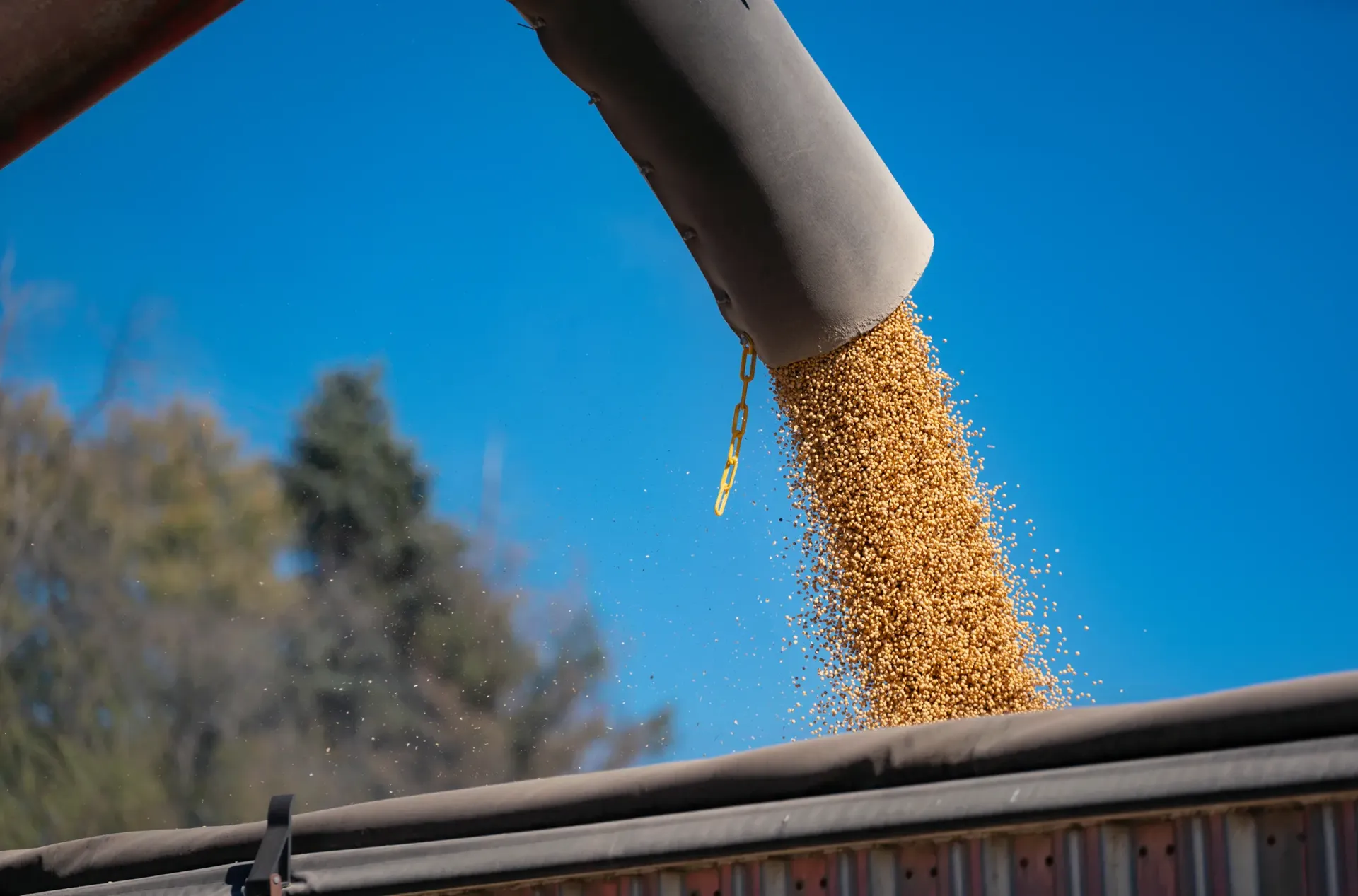
I often find the best stories start with a simple question. In the case of deputy editor Marina Bolotnikova's great explainer on soybeans, it was this one: If US farmers can't sell their millions of tons of soybeans to China because of the Trump trade war, what happens to all those beans? Soybeans, as Marina found, are the invisible backbone of our meat-heavy diets and a wildly underused climate lever. Roughly three-quarters of global soy feeds animals, not people; only a sliver becomes food for humans via products like tofu or soy milk. That's a huge waste of land and calories. Meanwhile, a growing share of UUS soybean oil is diverted into biofuels that, once you count land-use change, can rival fossil fuels on emissions — pushing deforestation abroad as other vegetable oils rush in to fill the gap. The fix isn't more bailouts for farmers hurt by Trump's trade war. Instead, we should be using the world's most land-efficient protein to feed humans, not engines and animals, and invest in research and development that makes soy foods easy, delicious, and culturally legible. Don't blame the bean. Change how we use it. — Bryan Walsh, senior editorial director |
|
|
I'm in the mood for learning about... |
|
|
CAN'T STOP THINKING ABOUT... |
|
|
| Title: Climate editor
What I cover: How our changing planet is reshaping the ways we live, think, and feel
What I'm listening to: The rain peppering my rooftop (still) |
|
|
Over the past several days, it's rained harder than I've ever seen here in typically arid Durango, a mountain town in southwest Colorado where I live. The remnants of two tropical storms moved across hundreds of miles from Mexico and collided right here, dropping almost five inches of rain — more than a quarter of the amount we normally get in an entire year — in my small slice of the world in just a few days. Rivers surged past record highs. Levees were breached, bridges washed away. Nearly 400 homes were evacuated just a few miles up the road from where I live. But my reality kept unfolding, unchanged. Water didn't flood through my door. Nothing broke. I made soup. I answered emails. I started to doze after reading a few pages of a novel. I felt content, settled. It was as if the flood curved just slightly around me. And that is what I can't stop thinking about: the strangeness of being at peace while so many of my neighbors nearby were packing bags in a panic. How odd it felt to be calm inside a storm that was, for other people, the worst day of their year. We don't talk enough about these kinds of moments, the ones where climate disaster is happening, but not to you, exactly. These stories are subtler, without the drama of destruction. It's not hard to grasp the interconnectedness of climate systems — how tropical storms can travel thousands of miles and how ocean temperatures can drastically shape mountain weather. But we don't always talk about how complex the emotional geography of the experience of climate change can be — how two people living on the same grid can live through entirely different weeks. Yes, climate change is a collective crisis, but it rarely feels collective. The United States, in particular, with its sheer size and variety, is staggered and uneven. Floods there, sunlight here. One neighbor rebuilding, another baking cookies. And isn't that the shape of climate now? And a key dynamic that makes organizing a united front in our battle to address it so, so difficult? |
|
|
Want more Future Perfect in your inbox? Sign up for more newsletters here. Need advice? Submit a question to Sigal Samuels's advice column Your Mileage May Vary. |
|
|
Today's edition was edited and produced by Marina Bolotnikova. We'll see you Wednesday! |
|
|
|






Commentaires
Enregistrer un commentaire
Thank you to leave a comment on my site